On June 29th, Can Tho University of Medicine and Pharmacy (CTUMP) organized a workshop to share experiences on “Accessing Funding Sources and Preparing Project Proposals,” attracting the participation of the University's leadership, management staff, lecturers, researchers, and domestic and international experts. The workshop aimed to update information on international cooperation programs, share experiences in project development, advocacy, and management, and contribute to improving the capacity to access funding sources for training, scientific research, and infrastructure development of the university in the coming period.
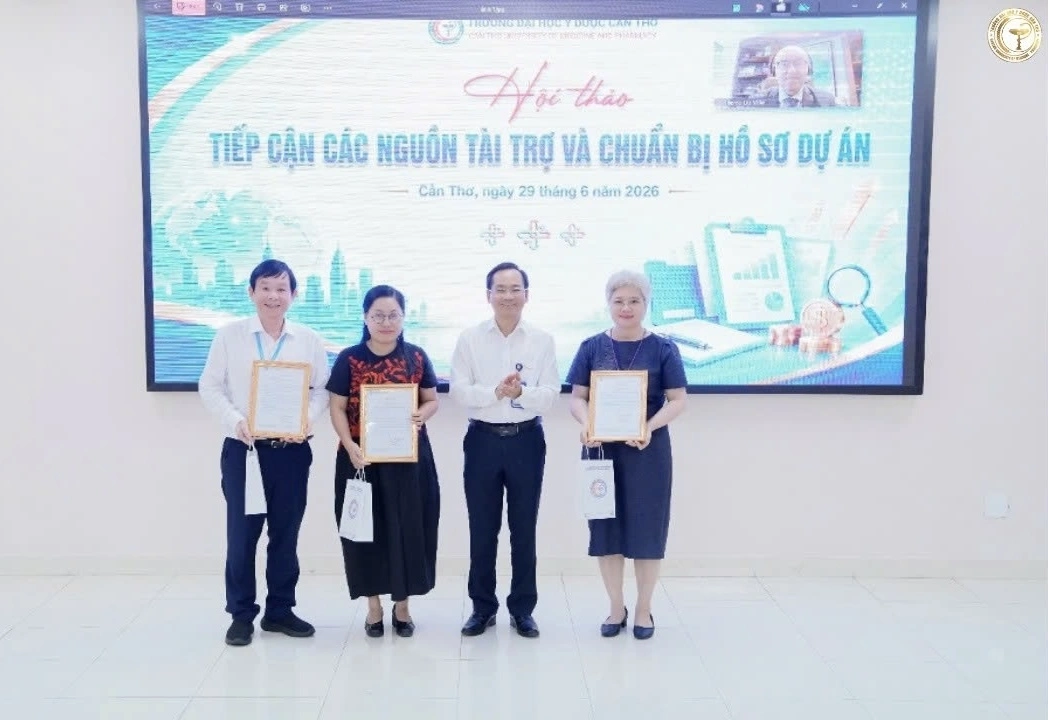
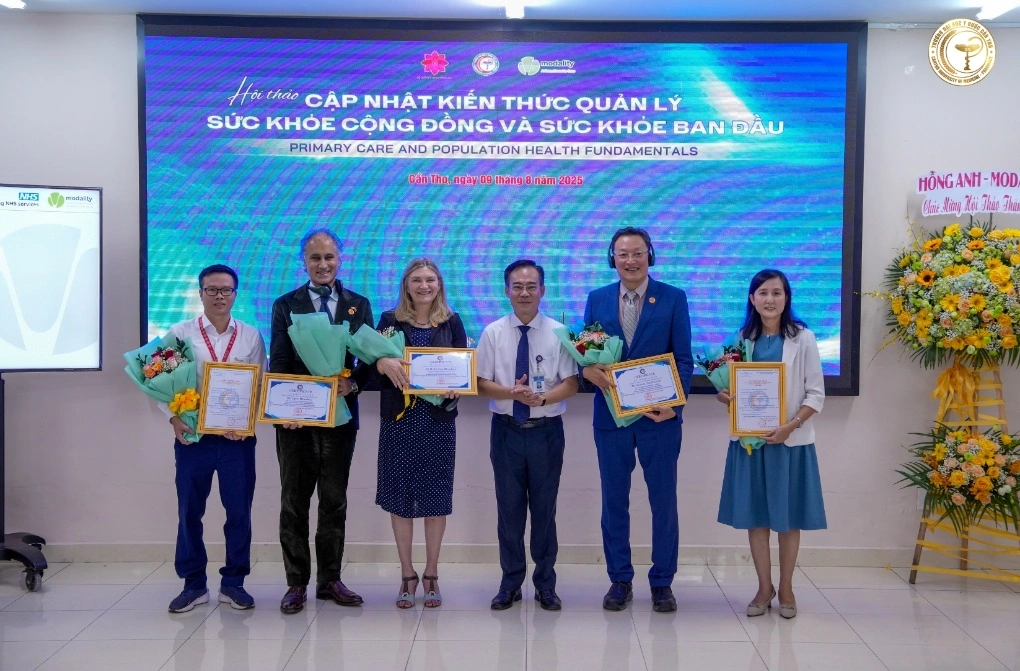
Prof. Nguyen Trung Kien, Rector presented letters of appreciation to the speakers who participated in the presentation and contributed their expertise to the workshop.
In his opening remarks at the workshop, Prof. Nguyen Trung Kien, Rector of Can Tho University of Medicine and Pharmacy, stated that in the context of higher education institutions gradually implementing autonomy, diversifying financial resources, especially from official development assistance (ODA) programs, international cooperation projects, and funding, is crucial for the sustainable development of the University.
According to Prof. Nguyen Trung Kien, since 2017, Can Tho University of Medicine and Pharmacy has been one of the higher education institutions implementing Group 1 autonomy, fully self-financing both investment and recurrent expenditures. This necessitates proactively seeking additional external resources to improve the quality of training, scientific research, human resource development, and infrastructure investment.
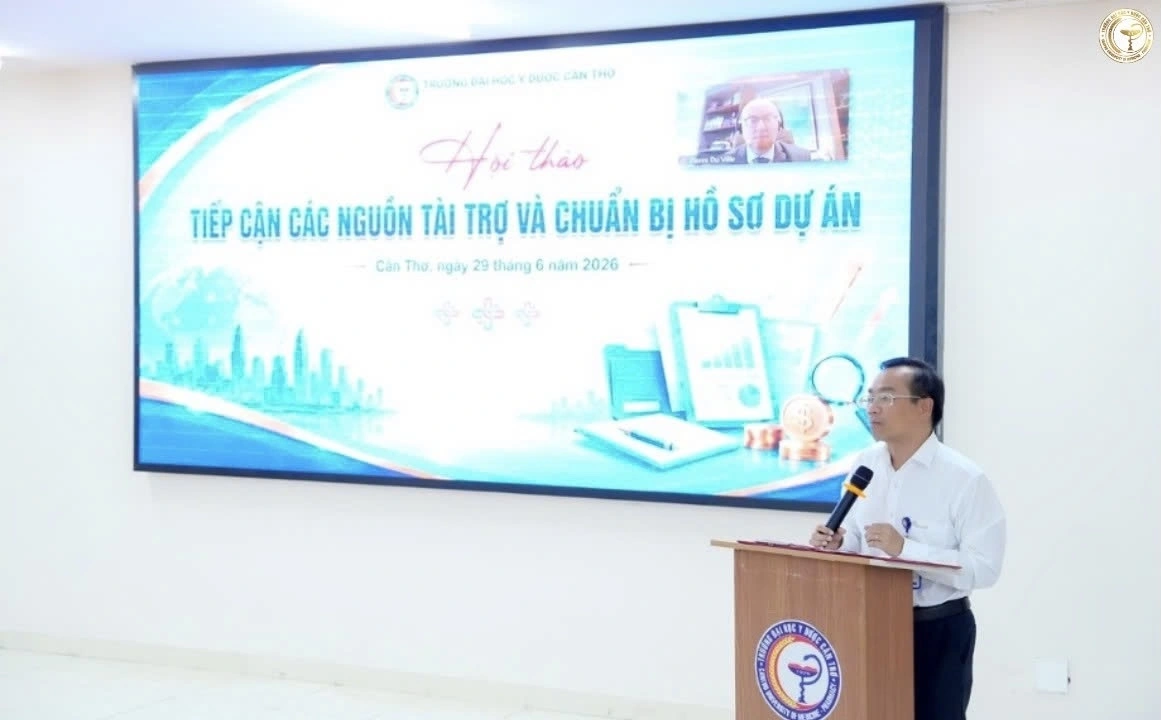
Prof. Nguyen Trung Kien, Rector delivered the opening remarks at the workshop.
The Rector of Can Tho University of Medicine and Pharmacy stated that in recent years, the University has participated in and benefited from several international cooperation programs, such as projects with the Wallonie-Bruxelles Delegation (Belgium), the COIL project with HOGENT University (Belgium), the FHF project in the field of ophthalmology, and some others. However, most of these projects are implemented through the Ministry of Health or other leading units, while the number of projects proactively proposed by the University's own specialized units, lecturers, and researchers remains limited. This is also the reason why the University organized the workshop to equip its staff and lecturers with additional knowledge and skills in accessing international funding programs.
Prof.Nguyen Trung Kien expressed his hope that through the discussions at the workshop, faculty and staff would gain more experience in developing ideas, preparing project proposals, and gradually forming cooperation proposals that align with the university's development orientation and meet the requirements of international funding organizations. This would expand academic exchange activities, scientific research, and international conferences and workshops in the coming years.
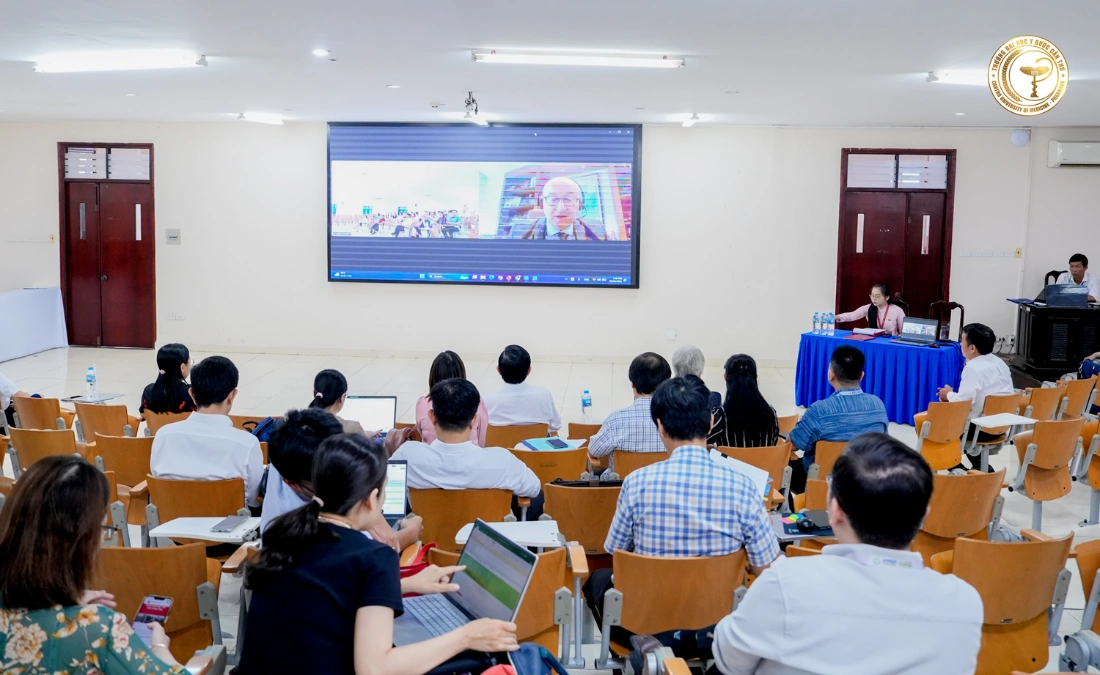
Mr. Pierre Du Ville, Head of the Wallonie-Bruxelles Delegation in Vietnam, shared information on "Accessing Information on Wallonie-Bruxelles Funding Programs."
At the workshop, Mr. Pierre Du Ville provided an overview of the cooperation system between the Wallonie-Bruxelles Federation (Belgium) and Vietnam in the fields of higher education, scientific research, and innovation.
According to Mr. Pierre Du Ville, cooperation between Wallonie-Bruxelles and Vietnam has been ongoing since the 1990s and has gradually expanded through triennial cooperation programs developed by the Joint Standing Committee of the two sides. In the 2025-2027 cooperation period, the two sides are implementing 17 projects focusing on two main areas: academic and scientific cooperation and training of high-quality human resources; and promoting programs on environment, climate change, innovation, health, culture, and the Francophone community.
The representative of the Wallonie-Bruxelles Delegation stated that over three decades of cooperation, approximately 820 projects have been implemented, more than 850 Vietnamese students have received scholarships from Wallonie-Bruxelles, and over 2,000 experts from both sides have participated in professional exchange activities. Many programs focus on applied research, technology development, sustainable agriculture, climate change adaptation, public health, and human resource training.
Mr. Pierre Du Ville also introduced the process of developing and selecting cooperation projects. Accordingly, proposals must ensure alignment with the development priorities of both Vietnam and Wallonie-Bruxelles, be linked to the United Nations Sustainable Development Goals (SDGs), and must be jointly developed and submitted by partners on both sides in English or French. Projects are evaluated based on feasibility, resource utilization efficiency, specific objectives, performance evaluation indicators, and a clear implementation plan.
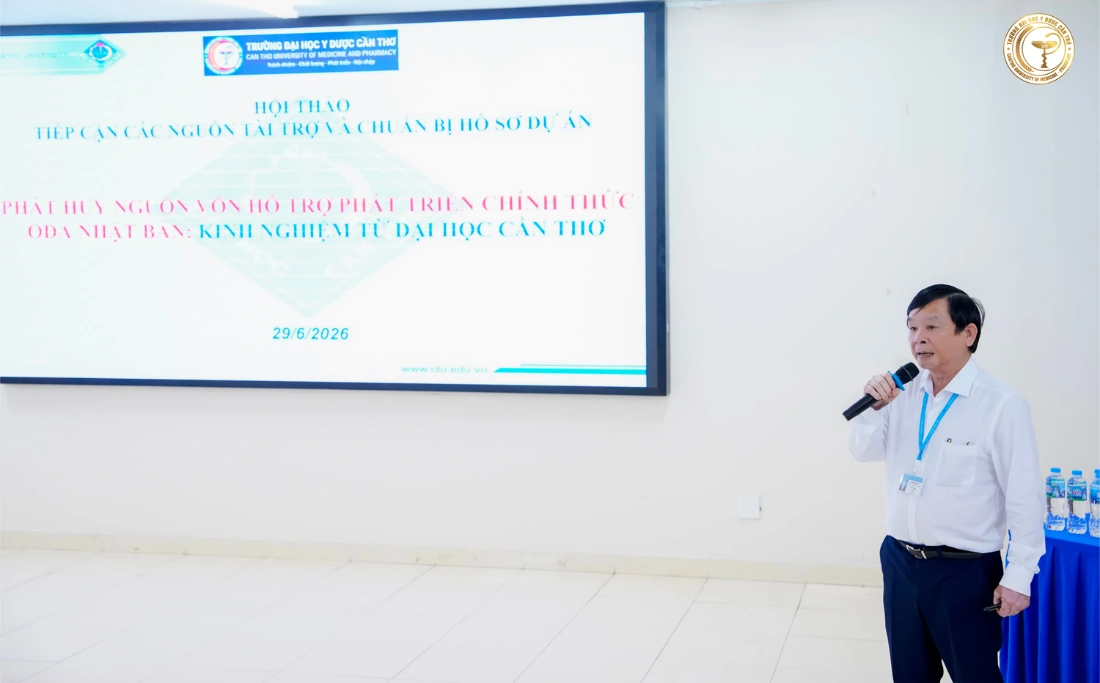
Assoc.Prof. Pham Minh Duc - Head of the Science and Technology and Innovation Department, Can Tho University, shared his experience.
From the perspective of implementing large-scale ODA projects, Assoc. Prof. Pham Minh Duc of Can Tho University shared his experience in implementing cooperation programs with the Japan International Cooperation Agency (JICA).
According to Associate Professor Pham Minh Duc, over the years, Can Tho University has simultaneously implemented ODA loan projects and JICA technical assistance projects with a total value of trillions of VND, contributing to upgrading infrastructure, developing human resources, and strengthening scientific research and university management capacity.
Based on his practical experience, he believes that project preparation should begin with correctly identifying the unit's development needs, building a specialized team, preparing counterpart resources, and proactively seeking international partners from the idea-forming stage. The project framework needs to clarify the context, the problem at hand, the scientific and technological gaps, the objectives, the expected results, the role of each partner, as well as its alignment with the unit's development strategy and the donor's requirements.
Sharing further on project management experience, Assoc. Prof. Pham Minh Duc said that implementation needs to be comprehensively prepared, from the management structure, disbursement plan, procurement, human resource training to the monitoring and evaluation mechanism. In addition, maintaining long-term cooperative relationships with international partners is also a crucial factor in the formation of subsequent projects.
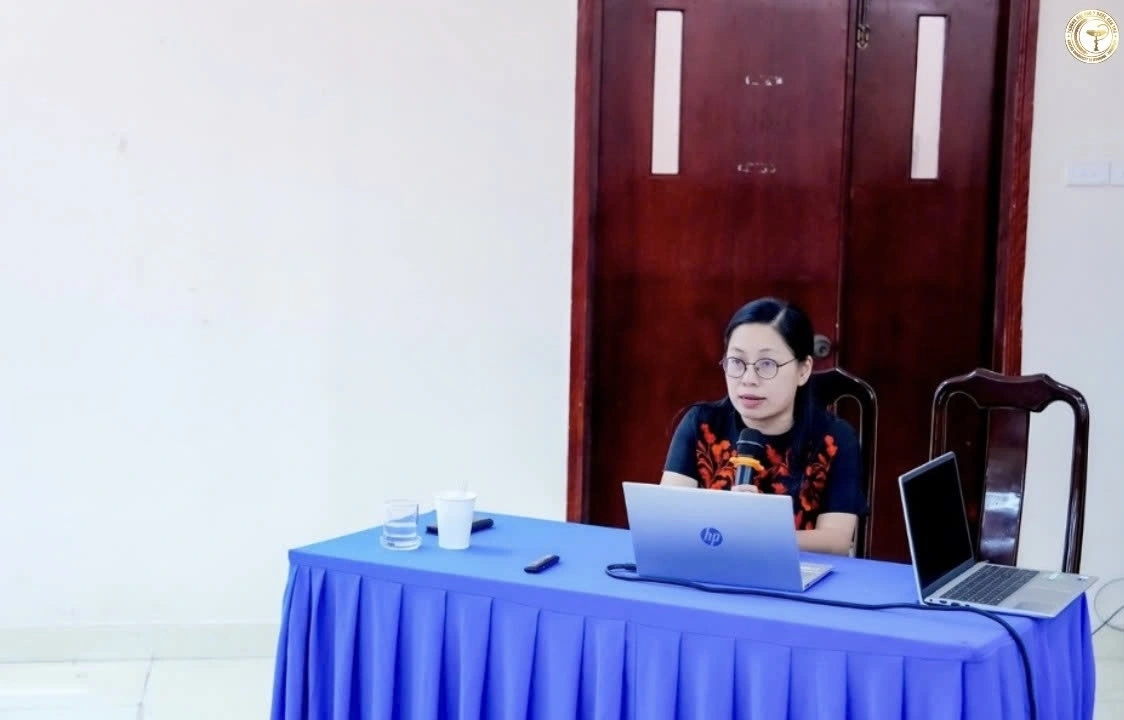
Ms. Dinh Thi Hien Van, Deputy Head of the Department of Science, Technology and Development Cooperation, Hanoi University of Pharmacy, presented a specialized topic on “Skills in writing, lobbying and managing ODA projects and projects from foreign non-governmental organizations (NGOs)”.
From the perspective of managing ODA programs and foreign non-governmental aid, Ms. Dinh Thi Hien Van, from Hanoi University of Pharmacy, believes that fundraising is not just a process of seeking capital but should be placed within the long-term development strategy of the educational institution.
According to Ms. Dinh Thi Hien Van, before developing a project proposal, units need to clearly identify development needs, thoroughly research the national strategy, the orientation of the sector and the priority areas of each donor. At the same time, it is necessary to clearly answer the problems that the project aims to solve, the capacity gaps, the scale of investment and the target beneficiaries to ensure the suitability of the proposal.
The speaker also noted that when developing project documents, the objectives need to be specific. It is measurable and linked to clear evaluation indicators. Donors are often more interested in the long-term results and impacts of a project rather than just focusing on implementation activities. Therefore, proposals need to demonstrate sustainability, the ability to maintain results after the project ends, and the added value that the international partner brings.
According to Ms. Dinh Thi Hien Van, practical experience shows that a successful ODA or international aid project depends not only on the idea but also on its alignment with the national development strategy, the educational institution's strategy, the donor's priority orientation, the project development capacity, and the ability to organize implementation after approval. Therefore, universities need to shift from a mindset of seeking funding to proactively building cooperative relationships, working with partners to solve development problems and create sustainable value.
According to the Organizing Committee, the workshop is an activity aimed at supporting the management staff, lecturers, and researchers of the University. Can Tho University of Medicine and Pharmacy updates information on international cooperation programs, enhancing skills in project development, advocacy, and management. This also serves as a foundation for the university to gradually expand its cooperation network with international organizations, universities, and agencies, contributing to mobilizing additional resources for training, scientific research, and the university's development in the coming period.
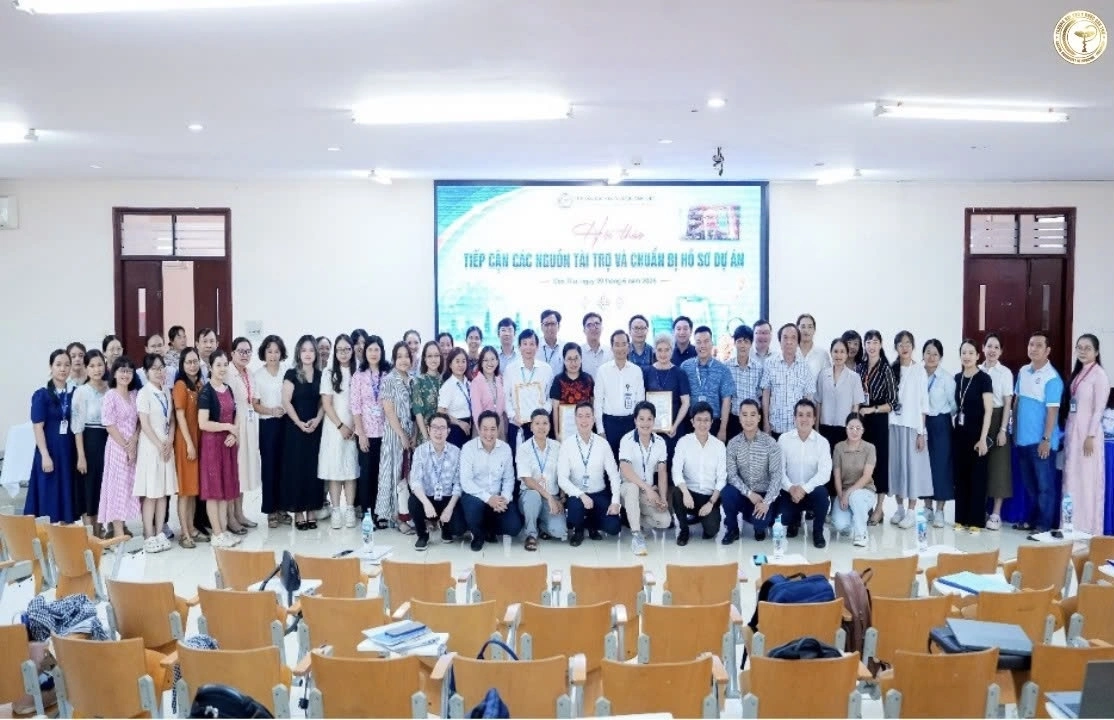
Some images from the workshop "Accessing Funding Sources and Preparing Project Applications":
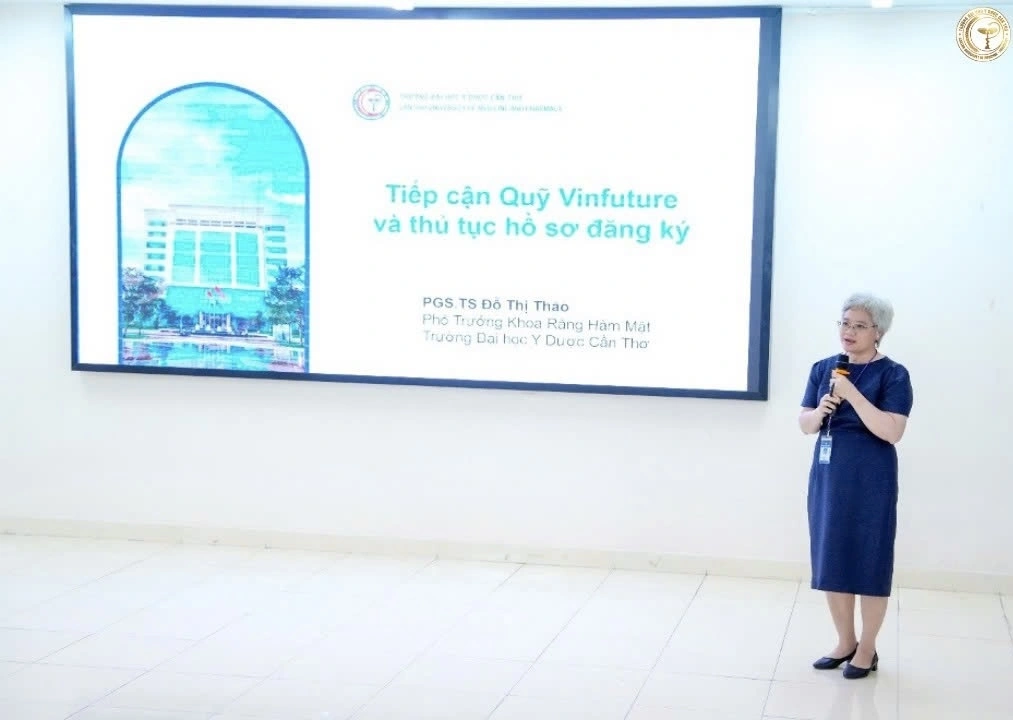
Assoc. Prof. Do Thi Thao, Vice Dean of the Faculty of Odonto -Stomatology, Can Tho University of Medicine and Pharmacy, presented a topic on the experience of accessing the VinFuture Fund and the application process.
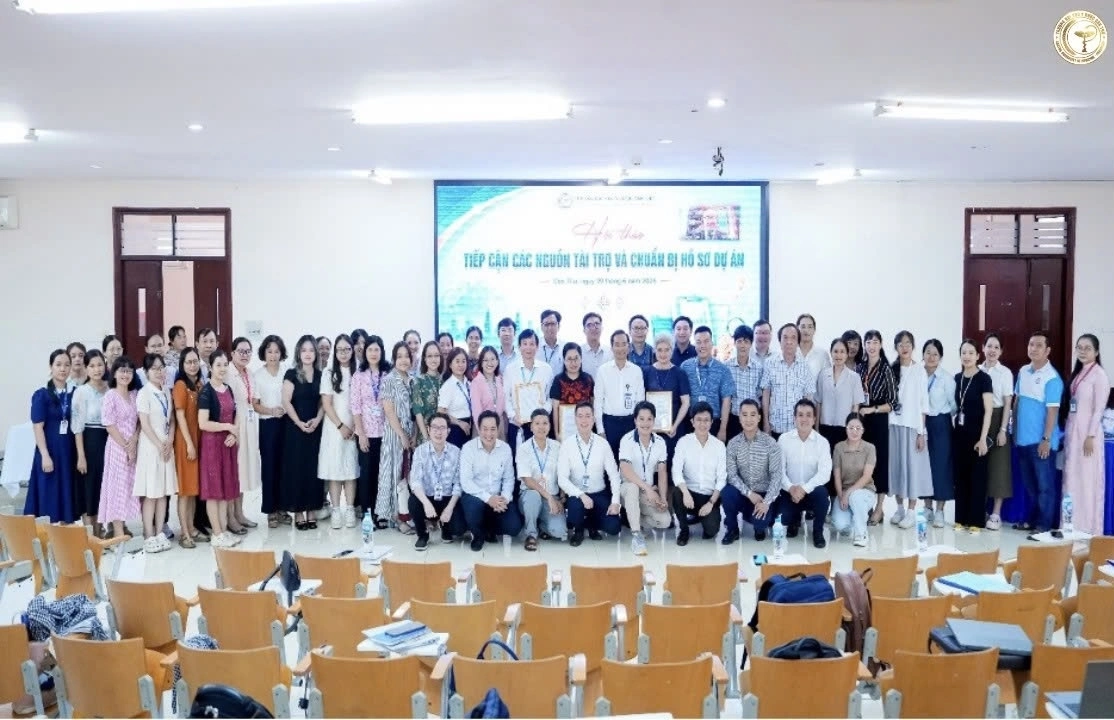
CTUMP Office